


FlexPhase: The End of 1ph vs. 3ph Battery Guesswork
FlexPhase: The End of Single-Phase vs Three-Phase Battery Guesswork
One Battery, Any Phase: Why FlexPhase Changes the Retrofit Conversation
Every home is a little different, and for battery storage, one of the biggest differences has always been the type of electricity supply it runs on. Some properties are single-phase, others three-phase, and until now that's meant the battery had to be chosen to match. If you've been quoted a system before, you may have run into this without even realising it: the supply type at your property quietly narrowed down which battery was even on the table.
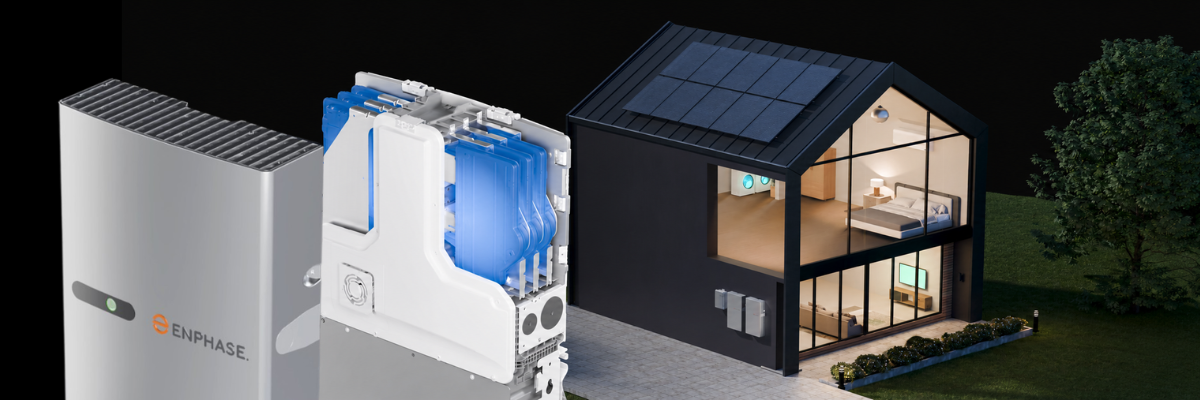
Enphase's IQ Battery 5P with FlexPhase changes that. It's a single battery that works on either supply, so instead of the property being checked against the battery, the battery adjusts to the property. It ships set up for single-phase as standard, but during installation it can be converted to three-phase just as easily, and if your energy needs grow later, whether that's an EV, a heat pump, or simply using more power than you used to, extra capacity can be added in 5 kWh steps without starting again from scratch.
Underneath, it uses the same six built-in microinverters found across the rest of the IQ Battery range, giving 5.0 kWh of usable storage and up to 3.84 kW of continuous power, either drawn from a single phase or spread evenly across three. In real terms, that means the battery can keep pace with what your home is actually using at any moment, rather than running as one large inverter that's often working harder than it needs to. There's also room to size the output to what your supply can take, since installers can adjust the power rating during setup to suit local network limits, which matters more than people often expect, since it can be the difference between a system being approved for a property or not.
Backup power is where this becomes especially useful. Paired with the IQ System Controller, the 5P can keep a home running through a power cut, and it's built to cope with the kind of momentary surge that appliances like air conditioning units, water pumps, or lifts need to start up, delivering a short burst of extra power for a few seconds so nothing trips out when it matters most. Because the system is built from several independent microinverters rather than one central unit, there's also no single point of failure. If one part ever needs attention, the rest of the battery keeps working in the meantime.
Safety sits underneath all of this. The 5P uses cobalt-free lithium iron phosphate cells, a chemistry that's naturally more stable under heat and far less prone to the kind of failures associated with other lithium batteries, and it's been evaluated to UL 9540A, one of the most rigorous safety standards a battery system can be tested against. Day to day, the Enphase App lets you keep an eye on how much you're generating, storing, and using, so you can actually see the system earning its keep rather than taking it on faith. And should anything need fixing, most components can be replaced individually rather than swapping out the whole unit, backed by a 15-year warranty that covers the battery up to 6,000 cycles.
For installers, all of this adds up to something worth knowing about beyond the spec sheet: a battery that no longer forces a decision at the survey stage based on what kind of supply a property happens to have. As retrofit storage continues to grow, that kind of flexibility is what actually moves the conversation forward, less about a single feature and more about a system that fits real homes as they are, and adapts as those homes change.
 Reset Cart
